The official launch issue — a field briefing on the public signals, procurement windows, capital flows, and member capabilities shaping the next layer of space infrastructure.
A SPACERETURN///// PUBLICATIONAN INTELLIGENCE BRIEFING FROM THE CALIFORNIA SPACE CLUSTERPUBLIC / MEMBER / PROCUREMENT INTELLIGENCE
THESPACEOBSERVER
NO. 001 LAUNCH ISSUE · 16 JUNE 2026SPACERETURN///// CALIFORNIA SPACE CLUSTERMARK 60U · SIGNAL 42/21 · LAUNCH ISSUE▲ PUBLIC OPPORTUNITIES · MEMBER INTEL REQUESTED
Five reads: how a public notice becomes a named team, the ESSCA II live watch and its official links, what a federal award record actually looks like at scale, the Pacific Gate opening, and the date of the next public meeting.
This is the first issue, published Saturday, 13 June 2026, and it is fair to say plainly what it is for. Over two years we have sat in program offices, on shop floors and in investor meetings, and heard the same complaint from both ends of the same problem: the buyer cannot find the qualified supplier, and the qualified supplier cannot find the notice in time to matter. Neither party is at fault. The information simply is not printed anywhere a working shop has time to read.
So we are printing it. Every week, in the same order, with the notice numbers and the response dates exactly as the agency published them. Where we judge rather than report, we will say so. Where the public record is silent, we will say that too, rather than filling the gap with a guess. A briefing that flatters its readers is of no use to anyone holding a tolerance.
The one ask
One capability card, from every member company, to Diego Padilla at diego@rakarinc.com, by Saturday, 27 June 2026, 5:00 p.m. PT. One page: certifications held with expiry dates, processes performed in-house, maximum part envelope, current lead time, and one named federal or prime customer you are already qualified to. No brochure, no capabilities deck, no company history.
Cards received before the monthly AMA are reviewed on that call; cards arriving after it are worked in the cycle that follows. They are read against the solicitation language in Procurement Watch, and where a relevant and consenting contact exists the cluster offers a named introduction. Cards not received are not matched. That is the entire mechanism.
Diego PadillaExecutive Vice President, Rakar, Incorporated · Co-Founder, SpaceReturn/////
OBS·001 / OPENING MEMO
Issue 001 is live
“Esteemed colleagues and supporters, we are pleased to share Issue 001 of The Space Observer, the new publication from SpaceReturn///// The California Space Cluster. This issue is a field briefing on the public signals, procurement windows, capital flows, and member capabilities shaping the next layer of space infrastructure.”
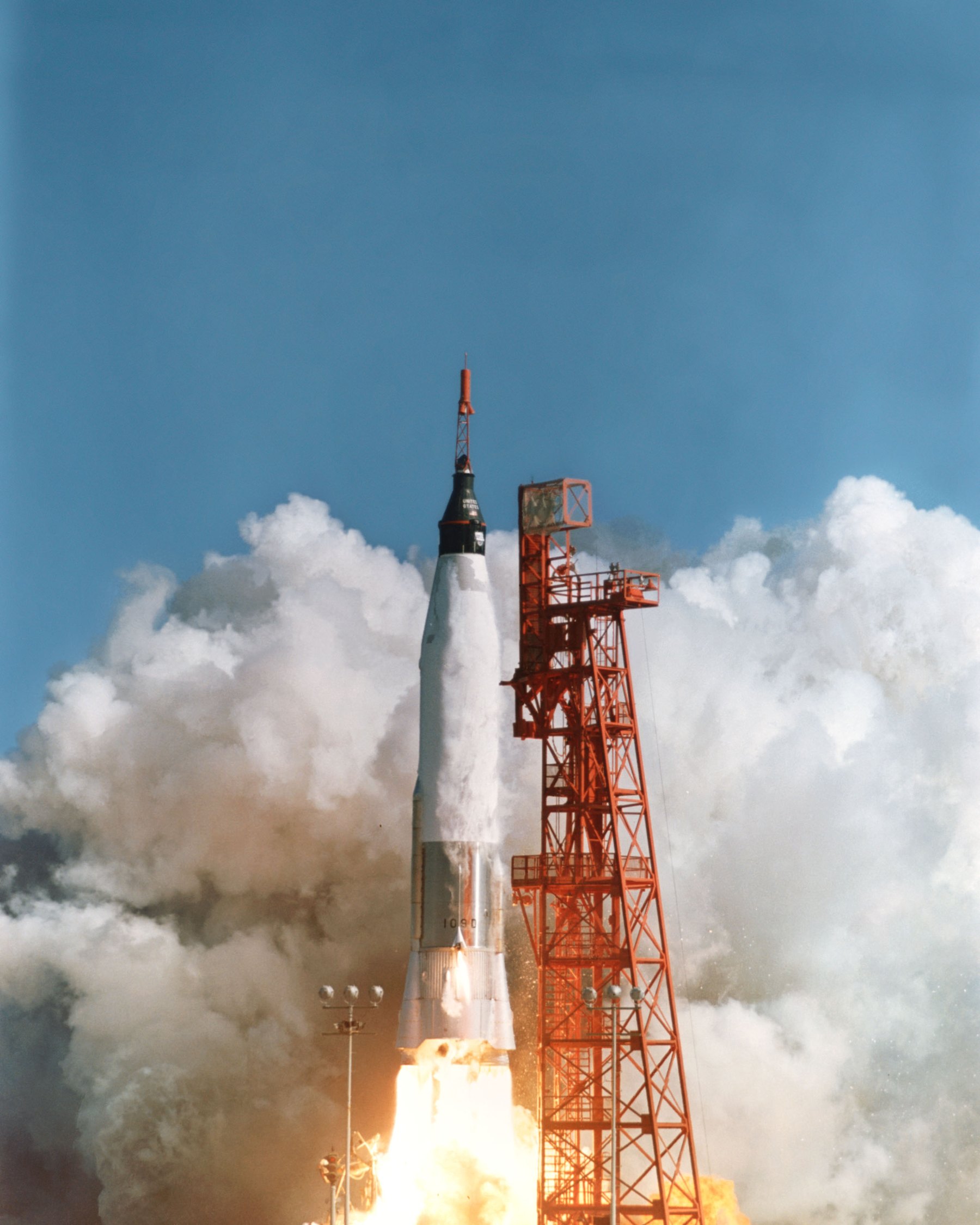
Katherine Johnson — the NASA mathematician who computed the trajectories that carried Alan Shepard, John Glenn, and Apollo 11 home — frames Issue 001. Her method: solve backwards from the target. The California Space Cluster launches on the same discipline.
Over the past two years, we have met with and visited hundreds of companies, program offices, investors, public-private partners, and industrial teams across the United States and abroad. This issue is about what happens between a public notice landing on SAM.gov and a named team showing up to do the work.
The companies in our cluster help create the signal before it is transmitted to the industry: preparing work packages, helping program offices read industrial capacity, engaging investors watching the next layer of infrastructure, and building the map the market follows.
A procurement signal is not useful until someone converts it into a work package, a capability note, and a partner introduction. That conversion work is the operating core of this cluster — done quietly, before the solicitation closes, not after the award is announced.
This is a working briefing for members and partners: public opportunities, ESSCA II, member capability, technology transition, capital formation, and practical next steps that turn signal into teams.
READ THE FULL ANALYSIS ↓FIELD DESK · OXNARD · CALIFORNIA · SATURDAY, 13 JUNE 2026 · SOURCES BELOW
“By far the hardest part of a rocket is actually scaling it — getting to orbit is hard, but actually scaling manufacturing is ridiculously hard.”
— PETER BECK, FOUNDER & CEO, ROCKET LAB · TECHCRUNCH · MARCH 2021 · OBS·001 / MANUFACTURING SIGNAL
OBS·001 / TEAMING DESK
Teaming Desk
Seeking — precision manufacturing, composites, engineering services, and MRO capabilities for ESSCA II task-order positioning across Marshall, Michoud and Stennis.
Seeking — founders, investors, inventors and companies building the next layer of space infrastructure who want to be part of this launch signal.
·Offering — a documented federal-relationship lane and a working member network for capability notes, teaming requests, and introductions.
Send capabilities in plain terms: what you do, what standard you meet, what hardware or software you have touched, what geography you can support, and whether the note may be shared publicly, member-only or one-to-one. Not yet in the cluster? Request the member intake path.
Oxnard-founded precision manufacturer of engineered plastic, precious-metal-insert and high-performance metal components, in continuous operation since 1951, with parts the company states have flown on crew capsules, the Space Shuttle, the International Space Station and Falcon 9.
CAPABILITY INDEX · PRECISION MOLDING AND MACHINING
1951Founded by Ray Laporte and Karl Bischoff
12,000+Distinct commodities in catalog
AS9100-D · ITAR M28536Quality and export-control registration
Rakar, Incorporated was founded in 1951 by Ray Laporte and Karl Bischoff and manufactures engineered, high-precision components and assemblies in engineered plastics, precious-metal inserts and high-performance metals, notably electrical connectors and insulators, from a catalog of more than 12,000 distinct commodities. In-house processes include injection, transfer and compression molding, five-axis wire and sinker EDM, and precision CNC machining, with tooling and engineering handled at its Camarillo AKKT Engineering & Tooling site, 512 Dawson Drive Suite 4N, Camarillo, CA 93012. The Oxnard headquarters is at 1680 Universe Circle, Oxnard, CA 93033, a 29,000-square-foot facility the company entered in 2023. The company employs more than 70 people across its two sites and holds AS9100-D, ISO 9001:2015, ITAR manufacturer registration (M28536) with the U.S. State Department, and WMBE, DGS-CASBE and NMSDC-MBE designations, together with certified woman- and minority-owned status; its brochure additionally lists AS9102 FAIR, WOSB, SBE, MBE, SB-PW and WBE.
Government and prime relevance
Federal contract records show Rakar as a Defense Logistics Agency prime awardee; the company states that Boeing and SpaceX are also customers, and that it has been invited by NASA into a small-business alliance supporting spacecraft and launch-vehicle development from system design through flight and mission operations, with prior work touching ISS habitation modules, the Hubble and Chandra observatories and the Space Launch System. Federal award records show at least five Department of Defense prime contract actions between 2023 and 2024, the largest being award SPE4A724P5886 with the Defense Logistics Agency, valued at US$102,495.55, starting January 11, 2024, for a component described as “STRAP, SENSOR, TEMPER” (NSN 8510373493), with a period of performance running to December 20, 2026. Other listed customers include the U.S. Navy, Raytheon, Lockheed Martin, Sandia, TE Connectivity, ITT Cannon and Amphenol/Eaton Aerospace.
Rakar, Incorporated · DoD prime contract actions, to scale · 2023–2024
Obligated amounts on prime contract actions recorded against Rakar, Incorporated in the federal award system for fiscal years 2023 and 2024, drawn from USAspending.gov. A fifth action, SPE7L123P9642 of 24 September 2023 for a bomb rack support, carries $0.00 obligated in the same record and is therefore not drawn. These are Defense Logistics Agency part orders, not development programs: the figures are small by design and are shown to make the point that a documented federal past-performance record is built from orders of this size. Cluster assessment: the record, not the value, is what a prime’s supply-chain desk reads first.
Operating signal
No 2026-dated development beyond the ongoing period of performance on the DLA award is confirmed in the record. The last identifiable milestone remains the 2023 move into the enlarged Oxnard facility, which more than seventy years after founding still anchors the company’s expansion. Rakar’s dual-site structure, with molding and assembly separated from engineering and tooling at Camarillo, is described by the company as focused on defense and aerospace sub-tier work rather than volume commercial production.
OBS·001 · MEMBER MISSION PROFILEOXNARD · CALIFORNIA
OBS·001 / FIELD NOTE
Field Note — Two Years in the Field
CALIFORNIA · 34.05°N 118.24°W SPACERETURN///// THE CALIFORNIA SPACE CLUSTER · LAUNCH ISSUE · 16 JUNE 2026
Two years of shop visits produce one durable observation, and it is not flattering to anyone: the qualified supplier and the buying office are usually looking for each other at the same moment, in different documents, and neither finds the other in time. A sources-sought notice closes. A shop that could have answered it reads about the award nine months later. Cluster assessment: that gap is an information problem before it is an industrial one, which is why this publication exists in printed, dated form rather than as a mailing list.
OBS·001 · FIELD NOTEOXNARD · CALIFORNIA
OBS·001 / PACIFIC GATE
Pacific Gate
Pacific Gate is the standing column for this cluster’s work outside the United States. What is on the record so far is the direction of travel: two years of meetings with public-private partners across South-East Asia, the United Kingdom and Central Europe, in which the recurring request has been for an American component supplier that can show current certifications and a documented federal customer. Cluster assessment: the constraint abroad is the same as the constraint at home, and it is evidence of qualification rather than capacity. Named partners, corridors and instruments will be printed in this column as they become citable; none are asserted in this issue.
International public-private partner outreachONGOING
South-East Asia, United Kingdom, Central EuropeFIELD RECORD
Named partners — printed as they become citablePENDING
Corridor path — request an introductionOPEN
OBS·001 · PACIFIC GATEOXNARD · CALIFORNIA
OBS·001 / CAPITAL FLOWS
Capital Flows — what the record shows
From Issue 002 this column reports contract actions, indefinite-delivery ceilings, budget requests and announced transactions affecting the space industrial base, with contracted money kept separate from ceilings, because the two buy very different things. In this launch issue the column carries one figure only, and it is a small one: the federal award record for the publisher’s own shop, printed below at scale so that readers can see the standard of evidence this publication intends to hold itself to.
CAPITAL DESK · OBS·001 / CAP·01
OBS·001 / THE LEDGER
5DoD PRIME ACTIONS, RAKAR, 2023–24
$102KLARGEST OF THOSE ACTIONS · SPE4A724P5886
001LAUNCH ISSUE · 16 JUNE 2026
JUL 7NEXT PUBLIC AMA
OBS·001 / MARKET WATCH + READER PULSE
What this launch issue actually buys: a working signal network, not a mailing list.
Two years of relationship-building and a live procurement watch are the same story told from two ends. The cluster’s job is to translate that into operating questions for members.
MARKET SIGNALThe signal is created before it is transmitted.
A sources-sought notice is market research, and it closes weeks before any solicitation exists. A shop that puts its capability on the record at that point is read by the buying office; a shop that waits for the solicitation is reading a document already shaped by someone else’s answers. Cluster assessment: the earlier document is the one worth answering.
PRIME QUESTIONWho is the qualified team we have not named yet?
Program offices are mapping industrial capacity in real time. Cluster members should be in those maps — not introduced after the task order is written.
CLUSTER EDGEDocumented federal relationships, plus a Pacific Gate.
The cluster’s edge is the same at home and abroad: the certifications, the past performance, the federal-customer heritage — and now an international corridor partners actually want.
60-SECOND READER PULSE
Which module should Issue 002 carry the most of?
AStanding Watch — more instruments, with the numbers
BTeaming Desk — more sought-and-offered lines
CCapital Flows — contracted money, read closely
DMember Mission Profile — one company, read as a supplier
From public notice to named team: how a procurement signal becomes a working relationship
A public notice on SAM.gov and a named team on a shop floor are separated by four steps, none of which the notice describes. This is what those steps are, who performs each of them, and where a California supplier can insert itself before the last one is decided.
Public noticeSAM.gov, forecasts
Work packageScope + capability
Capability noteMember-submitted
Named teamIntroduction made
A public notice is not useful until someone converts it into a work package: a scope, a set of qualifications, and a timeline that a real company can act on. That conversion work is quiet and unglamorous, and it is exactly what this cluster does — reading a solicitation the way a program office reads it, then translating it into terms a supplier can respond to.
What the cluster does at that point is narrow and unglamorous: it reads the notice against a register of member capability, identifies which members could credibly respond, and says so before the response window closes. A scattered set of public notices becomes a small number of named teams because someone did that reading in the week the notice posted, not in the quarter the award was announced.
The practical implication for members is direct: the qualification work that determines who becomes a named team happens now, before the solicitation closes — not after the award is announced. Members with the relevant certifications, production capacity and federal heritage who have not yet introduced themselves through this cluster are introducing themselves too late.
Cluster action
Map your capability against the public notices already in front of this cluster. If you are not yet a named team on a program office’s list, this is the cluster’s job: surface the qualified supplier before the next task order is written.
ESSCA II: live watch and official links — the member workstreams to watch first
NASA’s Marshall Space Flight Center is running ESSCA II across Marshall, Michoud Assembly Facility, and Stennis Space Center. This launch issue opens our live watch on the opportunity: official NASA acquisition links, capability prompts, and the member workstreams worth watching first.
The capability scope covers engineering services, precision manufacturing, and technical services — the operating language of the supplier tier this cluster represents. We are tracking the SAM.gov posting and NASA’s acquisition forecast directly so members do not need to check five separate sources every week.
For members positioning into ESSCA II, the practical question is not “do we bid prime?” It is “which prime’s team are we already on?” Cluster-relevant functions include precision machining, composites fabrication, propulsion test support, structural engineering, integrated systems engineering, software assurance, and mission analysis at all three centers.
This cluster exists precisely to ensure members are positioned before the gap between prime award and first task order closes. After that gap closes, the supplier list is set for the life of the contract.
What we need from members this week
A one-paragraph capability card that names: the work scope, the relevant NASA center, the prime team you are positioned with (or want to be), and whether your capability may be discussed publicly or only one-to-one.
Where founders and investors should look next: a national signal for the next layer of infrastructure
This launch issue carries a national signal for entrepreneurs, inventors, investors, and companies building the next layer of space infrastructure. The map the market follows is being built now — and it is being built by the companies willing to prepare the work before the industry sees it.
SignalPublic notice
PackageWork scope
CapacityIndustrial read
CapitalInvestor map
For an investor, the useful signal in this state is rarely the funding announcement. It is the qualification record underneath it: which shops hold current certifications, which have delivered against a federal purchase order, and which can name a prime that has already audited them. Cluster assessment: that register is thin in public and is being assembled here issue by issue, which is the reason to read the Member Mission Profile before the Capital Flows column.
For founders: the earliest capital tends to move toward the companies that can already speak the language of a program office — capacity, qualification, certifications, past performance. For investors: this cluster’s two years of relationship-building across the United States and abroad is itself a map of where the next layer of infrastructure is being built.
If you are a founder, investor, or inventor who wants to be part of the conversations shaping this cluster’s next moves, contact us directly at info@spacereturn.org.
What this signal solves
Founders and investors have the capital and the appetite for the next layer of space infrastructure. What they lack is an early, credible map of where the industrial signal is forming. This cluster is that map.
AMA — SPACERETURN ///// THE CALIFORNIA SPACE CLUSTER — MONTHLY PUBLICLIVE · RECURRING
NEXT MEETING
Tuesday, 1 September 2026
11:00 AM Pacific · 45 minutes · in person & virtual
Ask Me Anything. Direct engagement with the cluster co-founders on programs, teaming, and the California space supply chain. Open to entrepreneurs, engineers, researchers, and anyone working in or near the space economy.
IN PERSONRakar, Incorporated 1680 Universe Cir Oxnard, California 93033
Cadence · first Tuesday of every month · 11:00 AM Pacific · recurring.
Capability cards submitted by 5:00 PM Pacific the day of the call are worked in the cycle that follows.
By-Laws & Capability Statement at spacereturn.org.
OBS·002 / NEXT ISSUE
Next issue — 002
Issue 002 will report on federal and commercial activity from 17–23 June 2026. What is fixed is the shape of the issue: five standing modules, printed in the same order every week, so that a member company knows where to look.
01 · STANDING WATCHLive federal instruments, with their numbers
Solicitations, sources-sought notices, RFIs and pre-solicitations posted or amended during the reporting week. Notice numbers and response dates are printed exactly as published, and the consequence for a California shop is stated in one line.
02 · TEAMING DESKSought and offered, drawn from the week
Every line on the desk traces to an instrument in that week’s Standing Watch. Readers who perform the work reply with a capability statement — certifications, processes, envelope, lead time, one named federal or prime customer — not a general introduction.
03 · CAPITAL FLOWSContracted money, kept apart from ceilings
Awards, ceilings, requests and announced transactions affecting the space industrial base. Contracted obligations are distinguished from indefinite-delivery ceilings and from budget requests, because the three buy very different things.
04 · MEMBER MISSION PROFILEOne member company, read as a supplier
A single cluster member per issue, described the way a prime’s supply-chain desk would read it: what is certified, what is performed in-house, and what the part envelope is.
05 · FRAMING FIGUREOne figure from the California record
Each issue opens on a person whose documented work explains why the week’s signal exists at all — the wind tunnels, laboratories and ranges that put this industry in this state, sourced to the public record.
The Space Observer is designed to become a working signal network: members, founders, investors, inventors, manufacturers, researchers and public-sector partners who can move real work forward.
Send capability notes with permission level: public, member-only or one-to-one. Candidate members can request intake before submitting sensitive details.
Name a teaming lead for each opportunity so the cluster can move from interest to work package.
Flag sensitive items before publication, especially export-control, international partnership or customer-private details.
Watch for No. 002 on Saturday, 20 June 2026, reporting on federal and commercial activity from 17–23 June 2026. Nothing from that window is asserted in this issue.
READER SERVICES · CONTACT / PRINT / SHARE
Use this briefing.
Reply, forward, print, recommend a company or manage your subscription. Every issue closes on the same footer, so that contact, print and preference controls sit in one predictable place.
Cadence: weekly, Saturday morning. Featured company sequence: The California Space Cluster (Issue 001), Mojave Air and Space Port (Issue 002), Rakar, Incorporated, then alphabetical. Send member capability notes, procurement signals, founder recommendations and field notes for consideration.