The shared Lane 1 ordering ceiling rose by roughly $11.4 billion to approximately $17 billion. Four of the seven have headquarters or major operations within a 25-mile radius of one another in the Los Angeles basin.
02 The industrial-base money has a template.A $7.1 million Defense Production Act Title III award funded one Ohio manufacturer's cover-glass capacity outright, the same week as the Lane 1 increase.
03 Four launch providers, one geography.SpaceX in Hawthorne, Rocket Lab and Relativity in Long Beach, Impulse Space in Redondo Beach — a national-security procurement outcome that reads as a Los Angeles County industrial map.
04 A California structures roll-up bought precision-machining capacity.Karman Holdings' $94 million acquisition of Walker Precision Engineering is a live valuation for what a qualified shop was worth as of 21 July 2026.
05 As of 21 July 2026, ESSCA II remained open until 2:00 p.m. Central on 6 August 2026.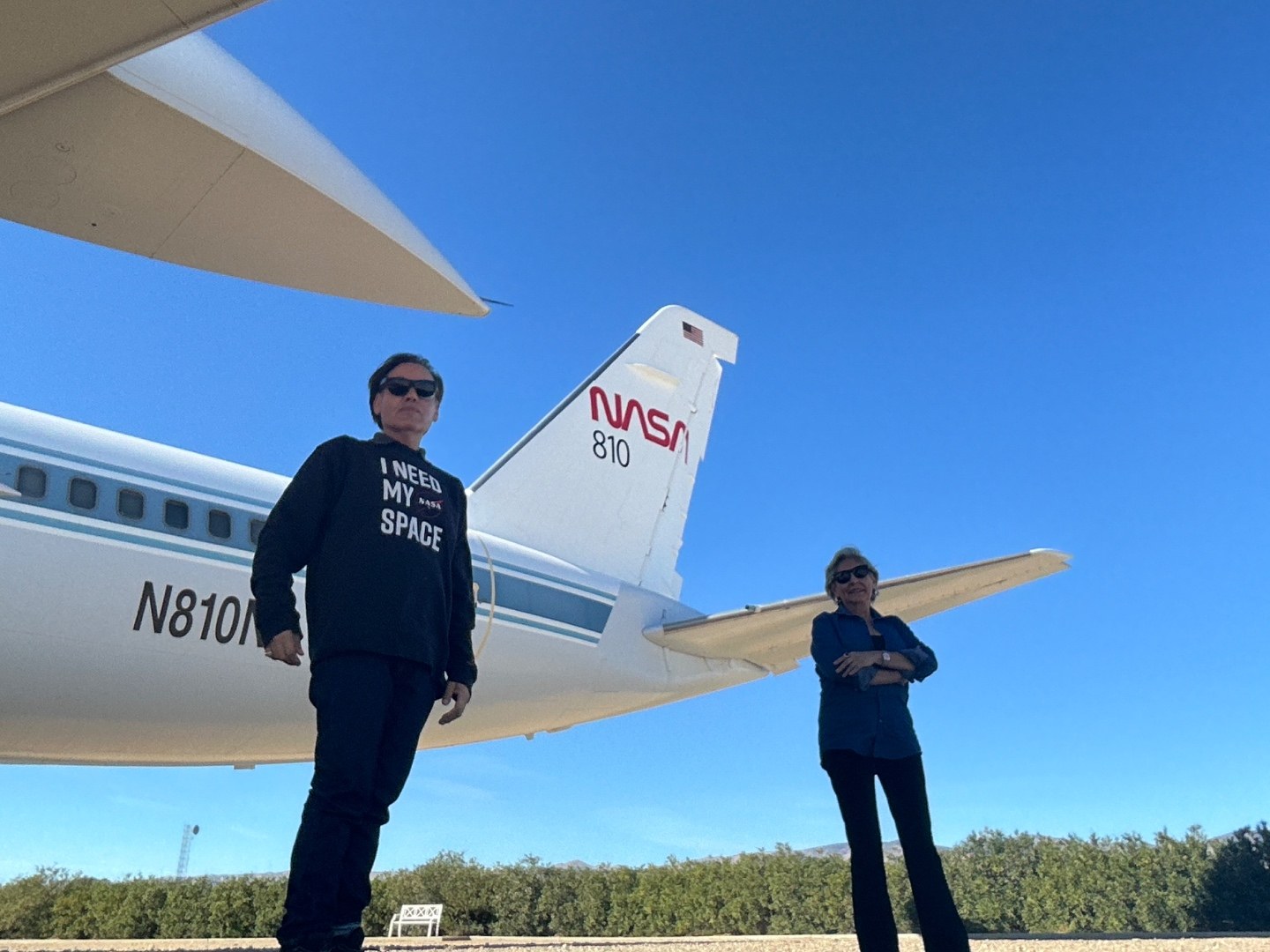
Notes from the co-founders
Four of the seven qualified providers on this vehicle have headquarters or major operations within roughly twenty-five miles of one another in the Los Angeles basin. That is not sentiment and it is not luck. It is the residue of eighty years of tooling, test capacity and trained people staying in one place.
A higher ordering ceiling permits additional launch-service orders, and with them potential demand for everything that flies inside them and the machined and molded parts underneath. Geography is still an advantage in this state. This issue is about using it deliberately instead of assuming it.
One capability card, from every member company, to Diego F. Padilla at diego@rakarinc.com, by Tuesday, 1 September 2026, 5:00 p.m. PT. One page: certifications held with expiry dates, processes performed in-house, maximum part envelope, current lead time, and one named federal or prime customer you are already qualified to. No brochure, no capabilities deck, no company history.
Cards received before the monthly AMA are reviewed on that call; cards arriving after it are worked in the cycle that follows. They are read against the solicitation language in Standing Watch, and where a relevant and consenting contact exists the cluster offers a named introduction. Cards not received are not matched. That is the entire mechanism.
The $17 billion ceiling, and the 25-mile radius it lands on
On 17 July 2026 the Space Force raised the National Security Space Launch Phase 3 Lane 1 ceiling by roughly $11.4 billion, to approximately $17 billion, across seven qualified providers. Four of those seven — SpaceX, Rocket Lab, Relativity and Impulse Space — have headquarters or major operations within a 25-mile radius of one another in the Los Angeles basin.
A ceiling increase of this size is a forward demand signal, not a set of new task orders; nothing about it obligates a dollar to a California machine shop. What it does is confirm where the qualified national-security launch base is actually sited, and for how long that base is likely to keep buying locally.
Framing figure — Ellen Ochoa
Ellen Ochoa was born on 10 May 1958 in Los Angeles, California, and grew up in La Mesa, California, the middle child of five. She took a Bachelor of Science in physics from San Diego State University in 1980, graduating Phi Beta Kappa, then a Master of Science in 1981 and a doctorate in 1985, both in electrical engineering from Stanford. As a researcher at Sandia National Laboratories and NASA's Ames Research Center she worked on optical systems for automated information processing, and holds three patents in optical inspection and object recognition. NASA selected her as an astronaut in January 1990. In 1993 she flew on STS-56 aboard Space Shuttle Discovery, becoming the first Hispanic woman to go to space; she went on to log four spaceflights and nearly 1,000 hours in orbit. On 1 January 2013 she became the eleventh director of NASA's Johnson Space Center, the first Hispanic and second woman to hold the post, serving until May 2018.
The LA Basin Launch Cluster: what a $17 billion ceiling actually sites
National Security Space Launch Phase 3 Lane 1 tripled its ceiling on 17 July 2026. Four of seven qualified providers build within 25 miles of each other in Los Angeles County.
One — The ceiling, and who holds it
On 17 July 2026 the Space Force raised the ceiling on National Security Space Launch (NSSL) Phase 3 Lane 1 by approximately $11.4 billion, taking the shared firm-fixed-price IDIQ from roughly $5.6 billion to approximately $17 billion. A justification and approval document covering the increase, filed under the docket name "NSSLPhase3Lane1," was posted to SAM.gov on 20 July 2026.
Seven providers now hold Lane 1 positions: SpaceX, United Launch Alliance and Blue Origin, admitted in fiscal 2024; Rocket Lab and Stoke Space, admitted in fiscal 2025; and Impulse Space and Relativity Federal, added on 7 July 2026 under separate contracts, FA8811-26-D-B001 and FA8811-26-D-B002, each carrying a $5 million initial task order for a capabilities assessment and a tailored mission-assurance approach. Lane 1 is the on-ramp tier of Phase 3: lower-risk missions that do not require the full certification burden of Lane 2, intended explicitly to broaden the qualified national-security launch base beyond the incumbents.
Read the roster by address rather than by name. SpaceX is headquartered in Hawthorne, California. Rocket Lab's Long Beach facility and Relativity Space's Long Beach headquarters are roughly nine miles apart. Impulse Space is based in Redondo Beach. Drawing a circle of about 25 miles across Hawthorne, Long Beach and Redondo Beach captures four of the seven Lane 1 providers. A national-security procurement outcome, arrived at through separate competitive and sole-source actions over two fiscal years, has produced a Los Angeles County industrial map.
Two — What a ceiling increase does and does not buy
A ceiling is not an obligation. Raising the Lane 1 IDIQ to approximately $17 billion widens the total value the Space Force may order against across all seven providers over the life of the vehicle; it does not itself release a task order, and it does not commit a dollar to any subcontractor. The distinction matters for how a shop times its business-development effort: the ceiling increase is the signal that more task-order competitions are coming, not the competition itself.
The scale of the increase is nonetheless the clearest forward demand signal of this window. An $11.4 billion addition to a single launch IDIQ, arriving five months after two new entrants were admitted, indicates that the Space Force wanted ordering capacity well above what the original $5.6 billion ceiling could support, though actual mission count and obligations remain contingent. Suppliers to any of the seven — structural, propulsion, avionics, ground-support or fluid-handling hardware — may treat the increase as a reason to renew supplier outreach, though each provider’s onboarding status has to be verified directly.
The same week supplied a smaller but more concrete precedent for how federal money reaches a manufacturer directly. On 17 July 2026 the Pentagon awarded $7.1 million under Defense Production Act Title III to Martin Materials Solutions to establish and scale production of space-qualified satellite cover glass in Twinsburg, Ohio. It is a single-component, single-manufacturer capacity award — the government funding a specific production line rather than buying finished hardware. For a California shop weighing whether DPA Title III is worth pursuing, this is the template: a named component, a named manufacturer, a stated production-scaling purpose.
Three — The rest of the Lane 1 build cluster
The four LA-basin providers are not the whole roster, and the other three carry their own read-through. United Launch Alliance, headquartered in Centennial, Colorado, assembles Vulcan at Decatur, Alabama and launches from Cape Canaveral and Vandenberg. Blue Origin, headquartered in Kent, Washington, builds New Glenn there and at Cape Canaveral. Stoke Space is based in Kent, Washington as well. None of the three non-California incumbents changes the concentration point: of the four providers added to Lane 1 across fiscal 2025 and fiscal 2026 specifically — Rocket Lab, Stoke Space, Impulse Space and Relativity Federal — three build in California, and two of those three sit inside the same few miles of Los Angeles County as SpaceX.
NASA's inspector general flagged a related capacity question on 23 June 2026, in a report titled "NASA's Launch Infrastructure," warning that United States launch infrastructure is nearing capacity. Pad and range congestion caps cadence; cadence caps the rate at which any of the seven Lane 1 providers can convert an expanded ceiling into flown missions and, downstream, into hardware orders. A supplier's positioning window against Lane 1 growth should assume the constraint sits as much at the range as at the factory floor.
Four — The valuation this concentration produces
On 20 July 2026 Karman Holdings, a California-headquartered space and defense structures manufacturer, announced its acquisition of Walker Precision Engineering for approximately $94 million — Karman's first European acquisition, in missile and space structures. The transaction is a live market valuation of what a qualified precision-machining capability is worth to a roll-up buyer at the moment the launch-provider base above it is expanding its ceiling. It is not evidence of demand from any Lane 1 provider specifically, and no chronology source connects the two transactions; it is offered here as the same week's read on what a qualified shop's capability is priced at.
The reading for California suppliers: the $17 billion ceiling is a demand signal with a geography attached to it, not a solicitation to bid. The actionable step is confirming, or building, a qualified-source position with whichever of the four LA-basin Lane 1 primes is nearest a supplier's own certifications and part envelope — before the next task-order competition, not after.
FIELD SIGNAL / NSSL PHASE 3 LANE 1“When the Phase 3 Lane 1 contract was awarded in June 2024, there were a total of 60 missions expected for order. The total number of estimated missions has now increased to approximately 170 due to the growing demand to deliver critical capabilities to orbit…”
— SPACE SYSTEMS COMMAND SPOKESPERSON · ON THE NSSL PHASE 3 LANE 1 CEILING INCREASE · PUBLISHED 22 JULY 2026 · REPORTED BY BREAKING DEFENSE
Teaming Desk
Where the seven NSSL Phase 3 Lane 1 providers actually build, taken from their own public headquarters and facility addresses, not from our assessment of demand. Members positioned near any of these sites should reply to this issue. We are not asking whether you are interested. We are asking how close you already are.
SpaceX — Hawthorne, Los Angeles County. Structures, propulsion, avionics and launch-vehicle integration at scale; the largest single build footprint among the seven.
Rocket Lab — Long Beach, Los Angeles County. Electron and Neutron production; the same facility base also holds a separate $266 million Space Systems Command suborbital launch contract awarded 21 July 2026.
Relativity Federal — Long Beach, Los Angeles County. Added to Lane 1 on 7 July 2026; roughly nine miles from Rocket Lab's Long Beach site.
Impulse Space — Redondo Beach, Los Angeles County. Added to Lane 1 on 7 July 2026; orbital-transfer and in-space mobility hardware.
United Launch Alliance — headquartered Centennial, Colorado; Vulcan assembly at Decatur, Alabama. No Los Angeles County build footprint.
Blue Origin — headquartered Kent, Washington. New Glenn assembly at Kent and Cape Canaveral. No Los Angeles County build footprint.
Stoke Space — headquartered Kent, Washington. No Los Angeles County build footprint.
·Offered — qualification and certification support. Cluster members holding AS9100-D and ITAR registration who can act as a qualified source for any of the four LA-basin providers above.
·Offered — CubeSat design, build and test, and satellite-operations training. See the member profile below.
Cambrian Works, Inc.
Reston, Virginia-registered builder of space-qualified networking and edge-compute hardware for on-orbit data handling, whose flagship GigRouter the company lists as in production.
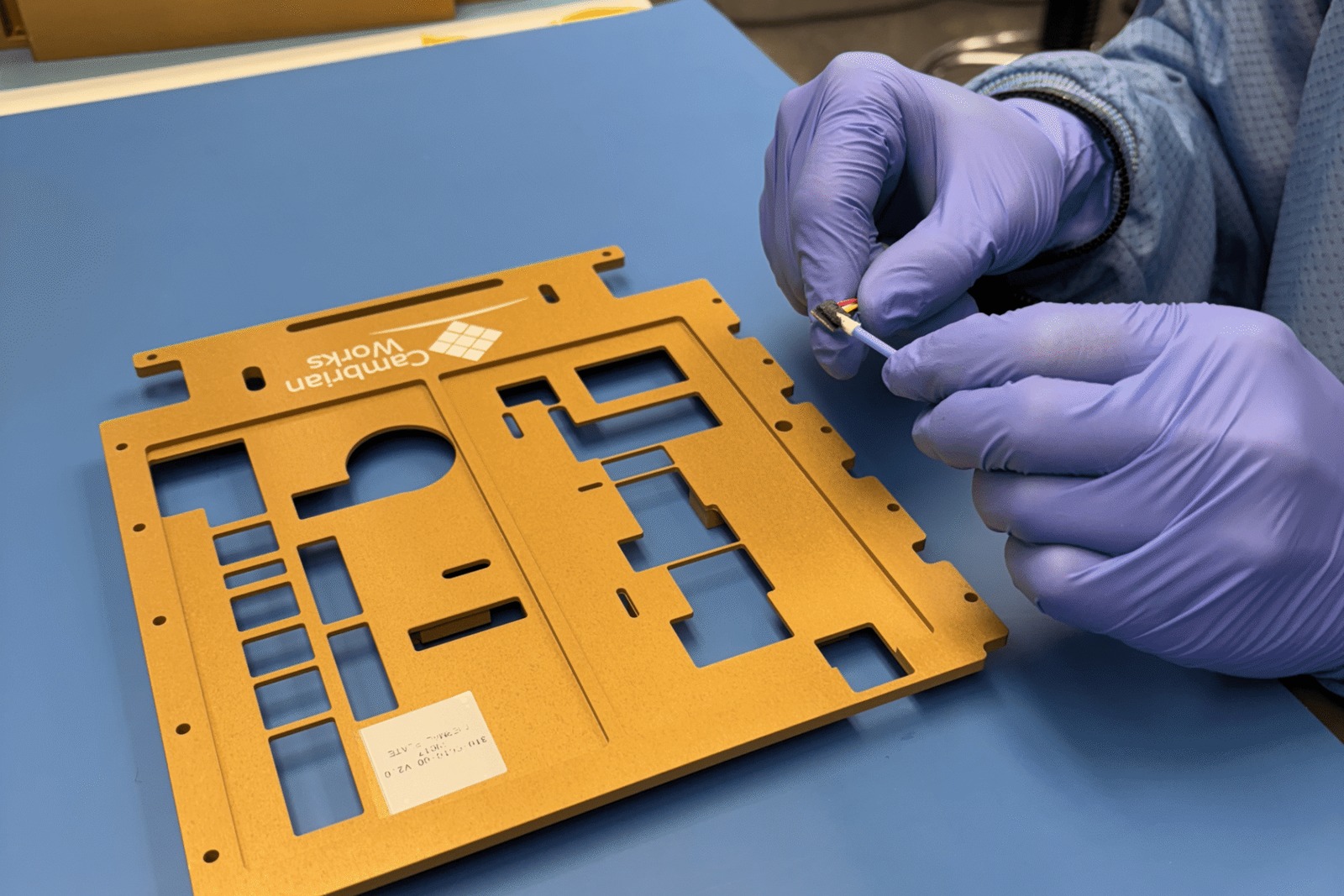
Cambrian Works, Inc. builds space-qualified networking and edge-compute hardware for on-orbit data handling. Its flagship GigRouter is a space-ready, high-performance router and edge-compute device built around an NVIDIA Orin AGX, which has completed NASA GEVS vibration, thermal-vacuum and radiation testing; it is in production at 267 × 200 × 61 mm, weighs 3.23 kg, and draws 35 W nominal and 75 W maximum. The wider product family comprises GigCompute (available December 2025, 1.9 kg), GigSwitch (available January 2026, 1.2 kg), next-generation 60–100 Gbps GigRouters, and the eTAP electric Thin Attachment Pad, which draws under 80 mW and is priced at US$90,000 for flight models and US$60,000 for engineering or life models on a six-month lead time. The variant delivered under its Space Development Agency contract is the GigRouter-60 (GR-60), with six 10-GigE ports for NEBULA-compliant space networks. No corporate quality, security or set-aside certification is stated; qualification is documented at product level only, through completed NASA GEVS testing.
Cambrian Works’ SBIR Phase II contract FA2401-24-9-0046 with the Department of Defense and Space Development Agency was valued at US$1,249,740 and ran from June 11, 2024 to September 11, 2025, developing the GigRouter-60 for NEBULA-compliant space networking. The company also holds an AFWERX Direct-to-Phase-II award of US$1.78 million and a SpaceWERX Orbital Prime (SORTIE) award, and has a NASA Swift Observatory Boost mission concept study with Astroscale U.S. and a partnership with Aptos Orbital. Company scale was approximately 20 people at the time its ISS flight hardware was built.
Cambrian Works lists the GigRouter as in production, and the next-generation 60–100 Gbps GigRouters as in development.
Capital Flows
Where committed federal and private money moved between 15 and 21 July 2026, and what it buys downstream.
Bars are proportional. The NSSL line is an increase in ordering authority, not an obligation; the Space Capital line is aggregate private investment across the sector for the half-year. Only the Karman and Slingshot lines are transactions with a named counterparty.
The single largest capital event of the week is regulatory rather than a check: the Space Force's approximately $11.4 billion increase to the NSSL Phase 3 Lane 1 ceiling, effective 17 July 2026, raising the shared indefinite-delivery, indefinite-quantity value across seven providers to roughly $17 billion. A ceiling is not an obligation. It sets the outer bound within which the Space Systems Command may place task orders; the money itself is committed order by order, against a mission count the service now projects at approximately 170 through 2034, up from 60 when the lane was awarded in June 2024, according to a Space Systems Command spokesperson.
Private capital confirms the same demand read. Space Capital's mid-year tally puts satellite and space-infrastructure investment at $8.1 billion for the first half of 2026 alone, already a full-year record with two quarters still to run. Slingshot Aerospace took $69.2 million from Space Force SBIR Phase III funds on 15 July 2026 for AI-enabled training technology under the Orbital Tracking and Threat Intelligence program — a Phase III SBIR award of that size is itself a signal that the underlying technology has cleared prototype risk and is being funded toward a program of record.
On the industrial-base side, the Pentagon's Defense Production Act Title III office committed $7.1 million to Martin Materials Solutions on 17 July 2026 to expand production of space-qualified satellite cover glass in Twinsburg, Ohio — a small dollar figure next to the Lane 1 ceiling, but a concrete precedent for how a single-component capacity gap gets funded once it is identified. Consolidation moved in parallel: Karman Holdings' acquisition of Walker Precision Engineering, disclosed 20 July 2026 at approximately $94 million, is a missile and precision-systems roll-up, not a launch-sector deal, but it is the kind of transaction that resets who owns qualified machining capacity a tier below the primes.
Read together, the week's capital signals point the same direction as the lead story: more money is being authorized to move through the launch and precision-manufacturing supply base than is yet under contract. The ceiling increase and the SBIR Phase III award both widen what can be ordered; neither is, by itself, a purchase order a California sub-tier supplier can point to. The strongest positioning window is likely to fall in the months after a ceiling increase, once individual task-order competitions under it begin to post.
Tuesday, 1 September 2026
11:00 AM Pacific · 45 minutes · in person & virtual
Ask Me Anything. Direct engagement with the cluster co-founders on programs, teaming, and the California space supply chain. Open to entrepreneurs, engineers, researchers, and anyone working in or near the space economy.
1680 Universe Cir
Oxnard, California 93033
Cadence · first Tuesday of every month · 11:00 AM Pacific · recurring. Capability cards submitted by 5:00 PM Pacific the day of the call are worked in the cycle that follows. By-Laws & Capability Statement at spacereturn.org.
Build the cluster with us.
SpaceReturn///// the California Space Cluster is a membership body of California space and aerospace manufacturers, operators, test facilities and service providers. Membership enquiries: diego@rakarinc.com.
Linked public record
- NSSL Phase 3 Lane 1 ceiling increase, DoD contract announcement, 17 July 2026 — War.gov
- Space Force triples launch contract ceiling amid rising demand — SpaceNews
- Extra $11 billion to fund huge leap in Space Force launches, mission-count detail — Breaking Defense
- Lane 1 ceiling increase justification and approval document — SAM.gov
- Space Force adds Relativity, Impulse Space to national security launch program, 7 July 2026 — SpaceNews
- Space Systems Command on-ramp contract announcement — Space Systems Command
- Pentagon awards $7.1 million to expand U.S. production of cover glass for satellites — SpaceNews
- Satellite investment sets annual record halfway through 2026 — SpaceNews
- Space Force awards Slingshot $69 million for AI-enabled training technology — SpaceNews
- Karman bursts into Europe with Walker acquisition — Aviation Week
- Rocket Lab $266 million suborbital launch contract, DoD contract announcement, 21 July 2026 — War.gov
- ESSCA II, Solicitation 80MSFC26R0002 — SAM.gov
- CLPS 2.0, Solicitation 80JSC026R0015 — SAM.gov
- NASA terminates Draper lunar lander mission — SpaceNews
- Ellen Ochoa biography — Wikipedia and NASA
Member profile — Space Zero Gravity
Method & colophon
Figures are drawn from primary records wherever a primary record exists — a solicitation notice, an appropriations document, a regulatory filing or an official release — and from identified secondary reporting where one does not. Every source is linked in the column alongside. Where two sources disagree, the disagreement is printed rather than resolved silently. Conclusions the record does not itself state are hedged, or marked as cluster assessment.
- Published by
- SpaceReturn///// The California Space Cluster
- Co-publishers
- Theresa Padilla-Chaparro · Diego Padilla
- Compiled from
- Primary records and identified reporting, linked alongside
- Member contributions
- None in this issue — submissions welcome
- Corrections
- info@spacereturn.org
- Dateline
- Saturday, 18 July 2026 · Oxnard, California
Use this briefing.
Forward it to one supplier who is not yet a member.
Member capability card. Standing module. Members may submit or update a capability card at any time; the one-page format set out above is the current standard.
Mailing address: *|LIST:ADDRESS|*
The Space Observer and its contents are sponsored by Rakar, Incorporated. To place advertising or sponsor a section, contact marketing@rakarinc.com. Public-record items are linked to open agency or publisher postings. Member-private items require express permission before publication. This briefing is informational only and is not legal, investment, export-control or procurement advice; verify all deadlines, eligibility and solicitation terms with the issuing authority before acting. © 2026 SpaceReturn///// The California Space Cluster.